
Cash
What can the business safely support?
Understand customer collections, supplier payments, stock and commitments. Identify what is tying up cash and whether spending plans fit the cash available.
Your business is trading. Sales are coming in. Expenses are being paid. But can you see what is driving your profit—and why cash sometimes tells a different story?
Coach Accountant helps established business owners turn financial records into useful management accounts, profitability analysis and clearer priorities.
Discuss your business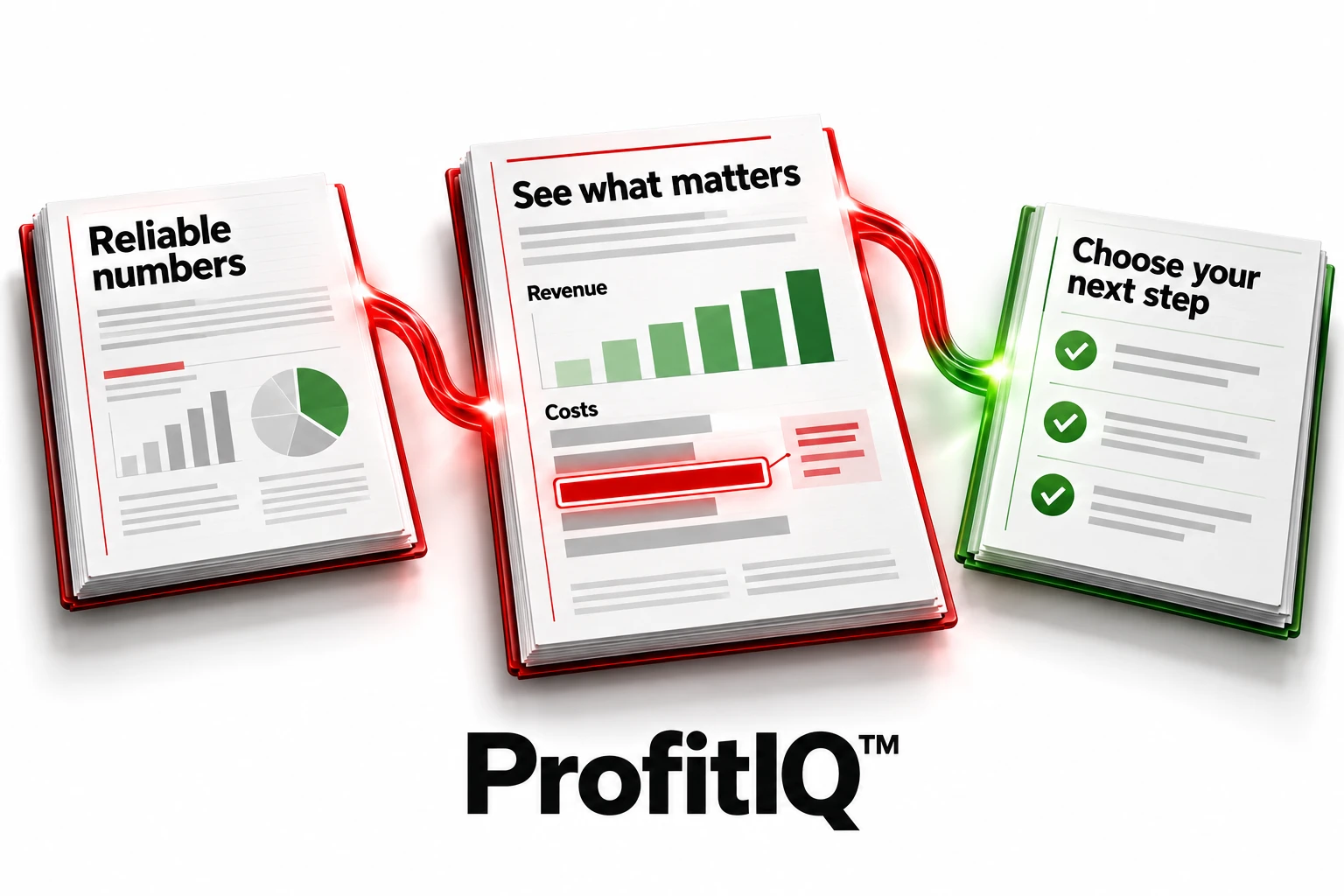
You may recognise these concerns:
ProfitIQ™ brings the relevant information together so you can understand performance and identify where attention will make a difference.
Your management accounts bring Cash, Profit, Control and Business Value into view. Each answers a different question about the same business.
Understand customer collections, supplier payments, stock and commitments. Identify what is tying up cash and whether spending plans fit the cash available.
Examine revenue, direct costs, margins and overheads. Where the records support it, compare profitability by product, service, customer or activity to see what earns its keep.
Check that records are complete, balances are reconciled and reports arrive in time to be useful. Compare results with prior periods and agreed budgets, then investigate material differences.
Use the findings to prioritise improvements in margins, cash discipline and dependable performance. Follow a focused set of Bearings Indicators to see whether those actions are making a difference.
Management accounts are only useful when the records behind them are sufficiently complete and accurate.
We first assess the condition of your accounting records. If bookkeeping is behind or balances need reconciliation, we identify the work required and agree the scope before proceeding.
Any catch-up work is scoped separately so you know what needs to be resolved before regular reporting begins.
If your records have fallen behind, our bookkeeping backlog and catch-up service can help establish a reliable starting point. If a SARS notice or dispute needs separate attention, explore SARS ResolutionIQ.
A service business earns R100,000 in revenue and incurs R70,000 in expenses. Its accounts show R30,000 profit. But customers have paid only R60,000 and the business has paid all R70,000 of those expenses.
Profit: R30,000. Cash movement: −R10,000. Customers still owe R40,000.
Cash: collections have not kept up with payments. Profit: the work earned R30,000. Control: confirm that the R40,000 customer balance is accurate and review overdue invoices. Business Value: improve billing and collection discipline so profitable work supports a more dependable business.
Simplified example excluding VAT, tax and other cash movements. Your own reports would reflect the circumstances of your business.
We agree the reporting frequency, level of analysis and deliverables before the engagement starts.
Management accounts provide regular information to help you manage the business during the year. Annual financial statements report on a completed financial year. Both are valuable, with different purposes.
Yes. We assess the backlog and evidence available, then agree the catch-up and reconciliation work needed before relying on the reports.
Profit and cash measure different things. Unpaid customer invoices, stock purchases, loan repayments and other movements can affect cash differently from accounting profit. We examine the factors relevant to your business.
No. We agree the reporting and analysis around your business, its priorities and the quality of information available.
Tell us what is getting in the way. We will review your enquiry and contact you to discuss the most sensible next step.
Discuss your business